How to Become Flexible at Home: A Beginner’s Guide
Quick Summary: You don’t need a gym, expensive gear, or hours of free time to get flexible. With just a corner of your living room and a smart 15-minute routine, you can build lasting flexibility right at home.
Think you need a fancy studio to open up your tight body? Think again. The truth is, your muscles and joints don’t care where you stretch—they care about consistency. Whether you’re working out on a yoga mat in your bedroom or a rug in your living room, you can make serious progress without stepping foot in a gym.
1. Can You Really Get Flexible at Home?
Absolutely. In fact, training at home often makes it easier to stay consistent because there’s zero travel time.
You don’t need an ambitious, hour-long program that you’ll abandon after three days. A short, realistic routine that you actually stick to will always beat a complex plan you rarely finish. The secret ingredients are simple: consistency, good technique, gradual progression, and listening to your body.
2. The Core Anatomy of a Home Routine
To get the most out of your home sessions, avoid random stretching. A well-rounded beginner routine includes:
A quick warm-up: To get the blood flowing.
Mobility work: To wake up your joints.
Lower & upper body stretches: To target major tight spots.
Relaxation: To wind down.
3. Top 5 Beginner Exercises for Home
You don’t need complicated equipment. Start with these fundamental movements:
1. Standing Hamstring Stretch: Stand tall, hinge gently from your hips with soft knees, and feel a nice, easy pull down the backs of your thighs. No touching the toes required!
2. Standing Quadriceps Stretch: Hold a wall for balance, bend one knee, and bring your heel toward your glutes while keeping your knees close together.
3. Low Lunge: Step one foot forward, drop the back knee to the floor, and shift your hips forward to open up tight hip flexors.
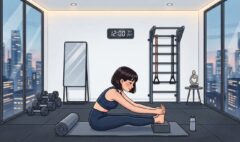
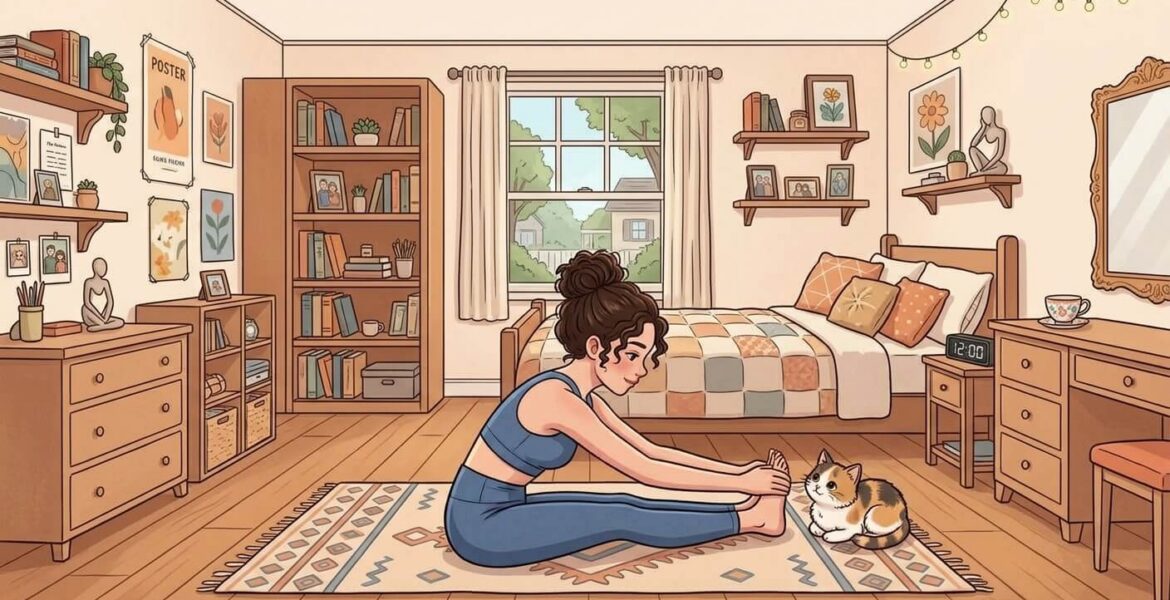
4. Seated Forward Fold: Sit with straight legs, hinge from your hips, and reach forward comfortably. Go only as far as feels good.
5. Figure-Four Stretch: Lie on your back, cross one ankle over the opposite thigh, and draw your legs toward you to release tight glutes and hips.
4. Stretching vs. Mobility: The Dynamic Duo
Stretching is great for length, but mobility is what gives you active control over your joints. Mix in movements like:
Hip and shoulder circles
Controlled leg swings
Cat-cow stretches
Thoracic rotations
Tip: Do your mobility work before deep stretching to prepare your body safely.
5. Your Ready-to-Use 20-Minute Home Routine
Here is a simple, plug-and-play routine you can do anytime:
Warm-up (3 mins): March in place, arm circles, gentle leg swings.
Mobility (5 mins): Hip circles, shoulder circles, cat-cow, controlled lunges, ankle mobility.
Stretching (10 mins): Hamstring, quad, hip flexor, calf, and figure-four stretches. Breathe deeply.
Relaxation (2 mins): Slow breathing and gentle movement to finish.
6. Common Traps to Avoid at Home
Aggressive stretching: Pain is a warning sign, not a badge of honor. Ease up.
Skipping the warm-up: Stretching cold muscles makes it harder and less comfortable.
Training without a plan: Randomly throwing in a stretch here and there makes tracking progress tough.
Expecting overnight results: Flexibility is a slow burn. Celebrate small daily wins!
Final Thoughts
Your home is the ultimate zero-pressure environment to build a regular flexibility practice. Start small, stay consistent, and let your body adapt at its own pace.