
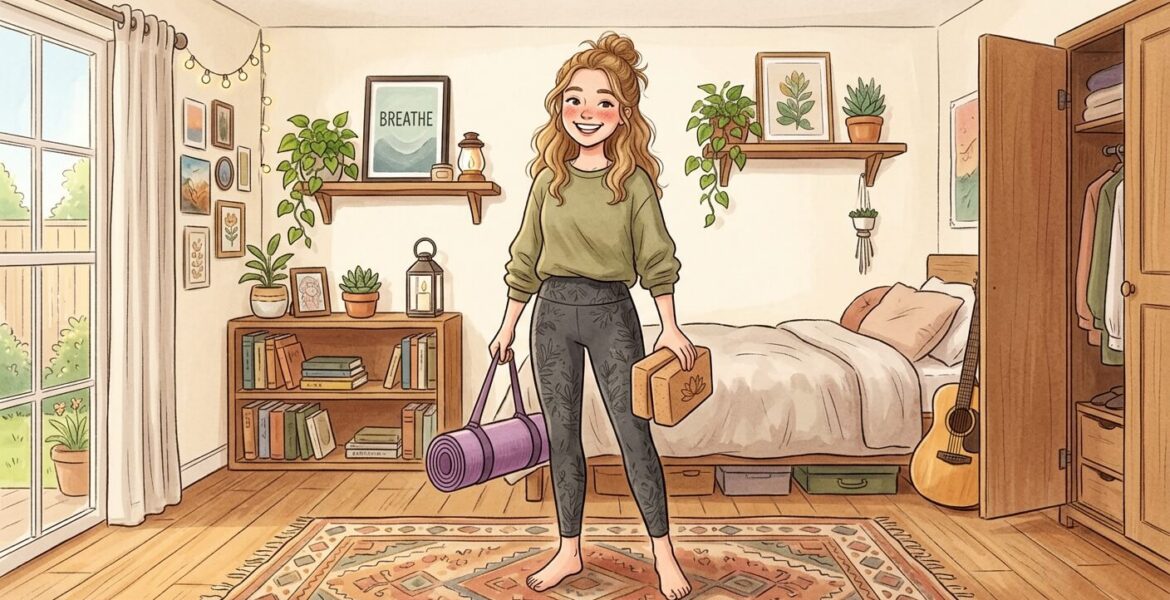
Splits at Home: Exercises and Workouts for Beginners
Splits at Home: How to Train on Your Own
Stretching and working toward the splits can be done not only at a gym. If you organize your space and training process properly, splits at home can be a convenient option for regular workouts.
The main thing is not to turn a home workout into an attempt to get lower at any cost. Flexibility develops gradually, so proper technique, consistency, and an appropriate level of load are much more important.
Can You Do the Splits at Home?
Yes, home workouts can become part of a regular flexibility routine.
You do not need complicated equipment. In most cases, you only need enough free space, comfortable clothing, and a non slippery surface.
However, training on your own requires careful attention to technique. If you are not sure whether you are performing an exercise correctly, it is better to start with simpler variations and gradually move on to more challenging ones.
How to Organize a Workout at Home
Prepare your space before starting your workout.
You will need:
• enough free space;
• a stable non slippery mat;
• comfortable sportswear;
• if necessary, simple additional equipment for support.
There should be enough room to move your legs freely without hitting furniture.
It is also helpful to choose a specific time for your workouts in advance. A consistent schedule makes training easier to turn into a habit.
Where to Start
If you have never done stretching before, you should not immediately try to get into the splits position.
A home workout can be divided into several stages:
1. Preparation
Start with gentle movements that help prepare your body for physical activity.
2. Warm Up
Gradually increase your activity level and range of motion.
3. Main Part
Move on to exercises aimed at developing the mobility you need.
4. Controlled Stretching
Work within your available range of motion without trying to suddenly increase the depth of the position.
5. Cool Down
Gradually reduce the intensity of the workout after the main part.
This structure can make your splits workout at home more organized.
Splits Exercises at Home
Independent workouts can include different types of exercises.
For example:
• gentle dynamic movements;
• exercises for hip mobility;
• controlled lunges;
• exercises for the back of the legs;
• exercises for the inner thighs;
• static positions within a comfortable range of motion.
The number and difficulty of exercises should be selected according to your fitness level.
You do not need to perform dozens of exercises in one workout. It is better to create a clear routine and repeat it regularly.
How to Stretch at Home
During splits stretching at home, it is important to control your movements.
You should not:
• bounce aggressively;
• make sudden movements;
• force yourself to go lower;
• ignore sharp pain;
• continue exercising if you feel unwell.
A feeling of tension during stretching is possible, but it should not turn into sharp or severe pain.
If a particular movement causes significant discomfort, reduce the range of motion or stop the exercise.
How Often Should You Train?
Your home workouts should be manageable enough for you to follow your chosen routine over a long period of time.
You do not need to have very long workouts every time.
Consistency is much more important for developing a regular habit.
You can choose specific days and times for your workouts, prepare your space in advance, and stick to your schedule.
If significant soreness or other unusual symptoms remain after your previous workout, give your body enough time to recover.
How to Stay Motivated
Flexibility training can be a long process, so it can be helpful to track small changes.
For example, you can:
• record your workout dates;
• keep track of completed exercises;
• periodically compare your range of motion;
• record how you feel;
• set small intermediate goals.
Do not evaluate your progress only by how close you are to the floor.
Your mobility may improve in other movements even if your splits do not look significantly different yet.
Common Mistakes During Home Workouts
Training Without Preparation
Starting your main stretching routine immediately after being at rest is not the best approach.
Trying to Copy Someone Else’s Results
Videos online often show people with completely different levels of flexibility and training experience. What works for one person may not be suitable for another.
Too Much Load
Increasing the intensity does not guarantee a proportional increase in progress.
Lack of Consistency
A few workouts followed by a long break do not create a sustainable habit.
Poor Technique
Even a simple exercise can be performed incorrectly. When training on your own, it is especially important to pay attention to your body position.
What to Do If You Are Starting From Scratch
If you have never done stretching before, start at a basic level.
Your first workouts should focus on becoming familiar with the exercises and gradually adapting to the load.
There is no need to test yourself after every workout by trying to determine how much lower you can go.
It is better to evaluate your progress after several weeks of consistent training.
Home Training and Safety
Independent workouts require careful attention to how you feel.
If you experience sharp pain, dizziness, or any other unusual symptoms during an exercise, stop the workout.
If you have injuries, medical conditions, or doubts about what level of load is appropriate for you, consult a qualified professional beforehand.
The Most Important Things About Doing the Splits at Home
Doing the splits at home is primarily a consistent training process.
To make your workouts effective and comfortable:
• prepare your training space;
• start with a warm up;
• work within your available range of motion;
• perform movements smoothly;
• gradually increase the load;
• stay consistent;
• give your body enough time to recover;
• focus on your own progress.
The home format is convenient because you do not need to travel to a gym and can choose your own training time.
But for exactly this reason, it is important to create a structure in advance and follow it.
Start Training at Home
If you want to work on your flexibility independently, start with a small number of workouts and gradually build a consistent training schedule.
Do not try to achieve the maximum result immediately. Consistent home workouts can help you better control the process and gradually move toward your goal.
Related Posts